TV Remote Control - Smart TV
- 4.2
- Rating
- 1.00M
- Installs
- Free
- Price
 Analysis by App-foxy
I reached for TV Remote Control - Smart TV after the familiar household moment when the physical remote had disappeared between the sofa cushions, someone was already watching, and nobody wanted to pause the evening to search every room. This free Tools app from Guanling Interactive turns an Android phone into a practical remote for a Smart TV. The idea is simple, but its usefulness depends on how well it fits the way your home shares screens, phones, and responsibility.
My overall impression is positive, with an important qualification: this is most useful as a convenient backup and shared household tool, not necessarily as a complete replacement for every original remote. It can make everyday control easier, especially when the phone is already in your hand. At the same time, a phone-based remote introduces boundaries that do not exist with a dedicated controller. The person holding the phone has control, so setup, trust, and communication matter more than the short store summary suggests.
How it feels in a real shared household
The strongest use case is not a dramatic emergency. It is ordinary coordination. One person is streaming something, another wants to lower the volume, and the original remote is across the room. Instead of interrupting the viewer or starting a search, the person with the phone can use the app. That small change is where the application earns its place.
You May Also Like

 Blood Strike: 2.5 Anniversary
Blood Strike’s Loadouts Turn Every Drop Into a Tactical Gamble
A close look at Blood Strike’s custom loadouts: how fast access to signature weapons reshapes its battle royale rhythm, rewards preparation, and narrows the gap between fights.

 Pandora - Music & Podcasts
Pandora’s Music Is Easy to Start, but Harder to Recover
Pandora’s strength is its low-effort path from a seed to a station. Its weak spot is how much confidence it asks you to place in connection, setup, and quiet recovery.

 8 Ball Pool
 Is Built on Rivalries, Rematches, and Routine
A close look at the rivalries, rematches, shared routines, and unanswered safety questions that turn a quick pool match into a persistent mobile community.

 Samsung Music
’s Quiet Strength Is Playing What You Already Own
Its reach comes less from spectacle than from dependable access to a personal library. That simplicity is both the app’s strongest retention engine and its ceiling.

 AccuWeather: Weather Radar
AccuWeather Review: A Quick, Clear Forecast for Everyday Decisions
For everyday plans, the best forecast is the one you can understand quickly. AccuWeather makes rain timing, radar, and local conditions easy to act on, with a few trade-offs.

 Hill Climb Racing
Why Hill Climb Racing Still Turns Crashes Into One More Run
A tiny car, a bumpy hill and one more upgrade: Hill Climb Racing keeps resurfacing because its simple chaos makes every near-miss feel personal.
More From Our News Desk



I also found the phone format useful when the television is being used by several people throughout the day. A remote can move from the living room to a bedroom, or disappear under a blanket. Phones tend to stay with their owners, which means the app can reduce the “where is the remote?” problem. It does not solve every disagreement about what to watch, but it removes one practical source of friction.
There is a trade-off, though. A physical remote is a shared object with a familiar set of buttons. A phone is personal. If I am holding the device with the app open, I effectively have the controls. That makes it convenient, but it also means the household should agree on who is using it and when. In a family or shared apartment, that simple conversation can prevent accidental channel changes, volume jumps, or someone taking control while another person is watching.
The app is especially sensible for people who regularly use their phone while watching television. If your phone is already beside you, switching to a remote interface is more natural than standing up. It can also be helpful for guests who do not know the television’s original remote layout, provided the connection and setup have already been handled.
I would be more cautious about treating it as the only way to control the television. If several people need independent access at the same time, a single phone-based controller can become a bottleneck. The original remote remains valuable as a neutral household device. In my view, this app works best alongside normal habits rather than trying to erase them.
What the basic experience gets right
The appeal is immediate: the app is focused on controlling a Smart TV from a phone instead of filling the screen with unrelated tools. That narrow purpose makes it easier to understand than a broad home-automation application. I do not need to learn an entire smart-home system just to handle routine television commands.
Its category placement as a Tools app also feels accurate. This is not entertainment content itself, and it is not trying to become a streaming service. Its value comes from removing a small obstacle between me and the television. That kind of utility can seem unimportant until the physical remote is missing or out of reach.
The application has a 4.2 average from around 6.5 thousand ratings, and it has passed the million-install mark. Those figures suggest that the concept is familiar to a substantial Android audience, while still leaving room for different experiences depending on the television, phone, and home network. I would not interpret the rating as a guarantee that every setup will behave identically.
Setup is where household boundaries begin
Before relying on the app, I would set it up when nobody is in the middle of a program. That is a small but useful rule. Connecting a phone to a television can require attention, and the first attempt is the wrong time to discover that the intended device is not the one being controlled. A calm setup also makes it easier to explain the arrangement to everyone who may use the screen.
I recommend choosing one primary phone for initial configuration rather than having several people experiment at once. This is not because the app should belong to one person permanently. It is because a single, deliberate first connection makes it easier to identify the correct television and establish who has control. After that, other household members can decide whether they need their own access.
That approach is particularly useful in homes with more than one Smart TV. A phone-based remote is convenient only when it is clear which screen it is addressing. Naming rooms informally in conversation, such as “the living-room TV” or “the bedroom TV,” is more reliable than assuming everyone will recognize a device from a generic label. I would avoid changing connections casually while someone else is watching.
There is also a privacy and ownership angle. The app is free to download, but it includes optional in-app purchases ranging from $3.99 to $94.99 per item. That makes it worth checking the purchase screen carefully before confirming anything, especially on a shared phone or a device used by younger household members. A free starting point does not mean every part of the experience is necessarily free.
For that reason, I would keep purchase decisions with the phone’s owner and discuss them before handing the device to a child or guest. This is not a criticism of the remote function itself; it is simply sensible phone hygiene. A controller that is easy for anyone to open should not automatically become a device where anyone can approve purchases.
Coordinating control without interrupting viewing
The most useful household habit is to treat the app like a shared key rather than an invisible background service. If I want to change the volume while someone else is watching, I should say so first. The app makes the action quick, but speed can make interruptions more abrupt. A short warning keeps the technology from becoming a source of annoyance.
This matters even more when several people are watching different things in the same home. A phone that was connected to one television earlier may still be the device someone expects to use now. I would check the intended screen before sending commands, especially after moving between rooms. The convenience of a mobile remote also creates the possibility of controlling the wrong television if the household is not paying attention.
Another practical tip is to keep the controlling phone charged during long viewing sessions. Unlike a traditional remote, the app depends on the phone being available and usable. If the phone battery is low, the owner may reasonably choose to preserve it for calls or navigation. That makes the physical remote a useful fallback, not an outdated object to discard.
For guests, I would complete the connection before handing over control. This avoids turning a social visit into a technical support session. It also lets the host decide whether the guest should have temporary access at all. In a shared home, convenience should not require giving every visitor unrestricted control over every screen.
I also see a useful role for the app in accessibility and reach. Someone who finds the original remote’s small buttons difficult may prefer having controls on a familiar phone. That benefit depends on the phone interface being comfortable for that person, so I would test it personally rather than assuming it will be easier for everyone. The app can improve access for one household member while being less comfortable for another.
Age, trust, and sensible access
The content rating is Everyone, which fits the basic idea of a television remote. There is no need to treat the app itself as mature content. However, an age-appropriate app can still provide meaningful control over a shared device. A child who can operate the phone may also be able to change what is playing or adjust the volume, so the important question is not whether the app is suitable to view, but whether the child should have control at that moment.
I would introduce it to younger users with a simple rule: ask before taking over the television. That rule is more useful than pretending the app can manage household behavior on its own. The application is a remote, not a substitute for family agreements. If a child needs access for a specific routine, an adult can provide the phone when appropriate rather than leaving control available without discussion.
Trust also matters between adults. In a shared apartment, one person may appreciate being able to control the TV from their own phone, while another may dislike the possibility of remote changes during a show. Clear expectations solve that conflict better than technical workarounds. I would agree on who normally controls the screen, when interruptions are acceptable, and which phone should be used for setup.
There is a subtle distinction between access and ownership. Installing the app on my phone does not mean I own the television or have priority over everyone else. The application makes control portable, but it does not create a fair order for choosing programs. Households that already struggle with screen-time disagreements may find that a phone remote makes control easier without making those disagreements easier to resolve.
For older relatives or less technical users, the app can be worthwhile if one person handles the initial setup and explains the controls patiently. I would not assume that “phone-based” automatically means “simpler.” Some people prefer the tactile certainty of physical buttons. If the original remote is comfortable and always available, there may be little reason to change their routine.
Where it compares well with usual alternatives
The usual alternatives are the television’s original remote, a universal remote, or the manufacturer’s own control solution. The original remote generally wins for tactile feedback and shared access. You can pick it up without unlocking a phone, and its buttons remain available even when nobody wants to lend out a personal device. For a household that values that simplicity, the original controller is still the better everyday choice.
A universal remote can be stronger when one person wants to control several kinds of equipment from one physical device. It may also feel more dependable for repeated use because it is dedicated to that job. The disadvantage is that it must be purchased, configured, and kept in a known place. This app is more attractive when the phone is already available and the need is occasional or spontaneous.
The manufacturer’s own app may offer deeper integration with a particular television brand, depending on that brand’s ecosystem. If you want a broader home-entertainment workflow, a dedicated official solution may be the better direction. I prefer TV Remote Control - Smart TV when I want a focused utility without committing the household to a larger platform.
The phone also has a different failure pattern from those alternatives. A physical controller can be misplaced, but a phone can be locked, muted, out of battery, being used for another task, or held by someone who does not want to hand it over. That is why I see the application as a strong supplement and a convenient fallback, but not an automatic replacement for every remote in the house.
Version, cost, and who should skip it
The current version is 1.3.6, and the app requires Android 11 or later. That requirement is important before installing it on an older spare phone intended to become a permanent household controller. A phone that cannot run the application is not useful as a backup, no matter how convenient the idea sounds.
The free entry point makes experimentation easy. I can try the basic concept without buying a dedicated controller first. Still, I would pay attention to any optional purchase prompts and avoid assuming that every household member needs a paid item. If the free functionality already handles the occasional remote task, spending more may not improve the experience enough to justify it.
I would skip this app if the television is not a Smart TV, if the household has no compatible Android phone available, or if everyone strongly prefers physical controls. I would also hesitate to make it the main solution in a home where multiple people need simultaneous, independent control. In those cases, the original remote or a dedicated universal controller is likely to create less confusion.
It is also not the right choice for someone looking for a complete entertainment hub. The application’s strength is direct television control, not replacing every device-management tool in the home. If your goal is to combine speakers, streaming equipment, lighting, and several screens into one coordinated system, a broader platform may serve you better.
My household verdict
After using it as a practical phone-based controller, I see TV Remote Control - Smart TV as a useful utility for households that often misplace the remote or want a convenient second way to manage the television. Its best qualities are immediacy, portability, and a narrow focus. I can understand why it has attracted over a million installs: the problem it addresses is small, common, and easy to recognize.
My recommendation comes with a clear household rule. Set it up deliberately, decide who should use it, and keep the original remote available. That combination gives you the convenience of a phone without making one person’s device the only route to the screen. It also keeps age, trust, and shared-device etiquette in the right place: with the people using the television, not with an app that was never designed to settle those questions.
Guanling Interactive has made a straightforward Tools app for a familiar need. It is free to start, rated Everyone, and supported on Android 11 and later. I would recommend trying it if your phone is usually nearby and your Smart TV remote frequently wanders off. I would not recommend replacing a perfectly reliable physical remote solely because the phone option sounds modern. Used as a thoughtful backup or a convenient shared-home tool, it earns a place; used without agreed boundaries, it can create as much coordination trouble as it removes.
FAQs for TV Remote Control - Smart TV
01What is TV Remote Control - Smart TV, and how does it work?
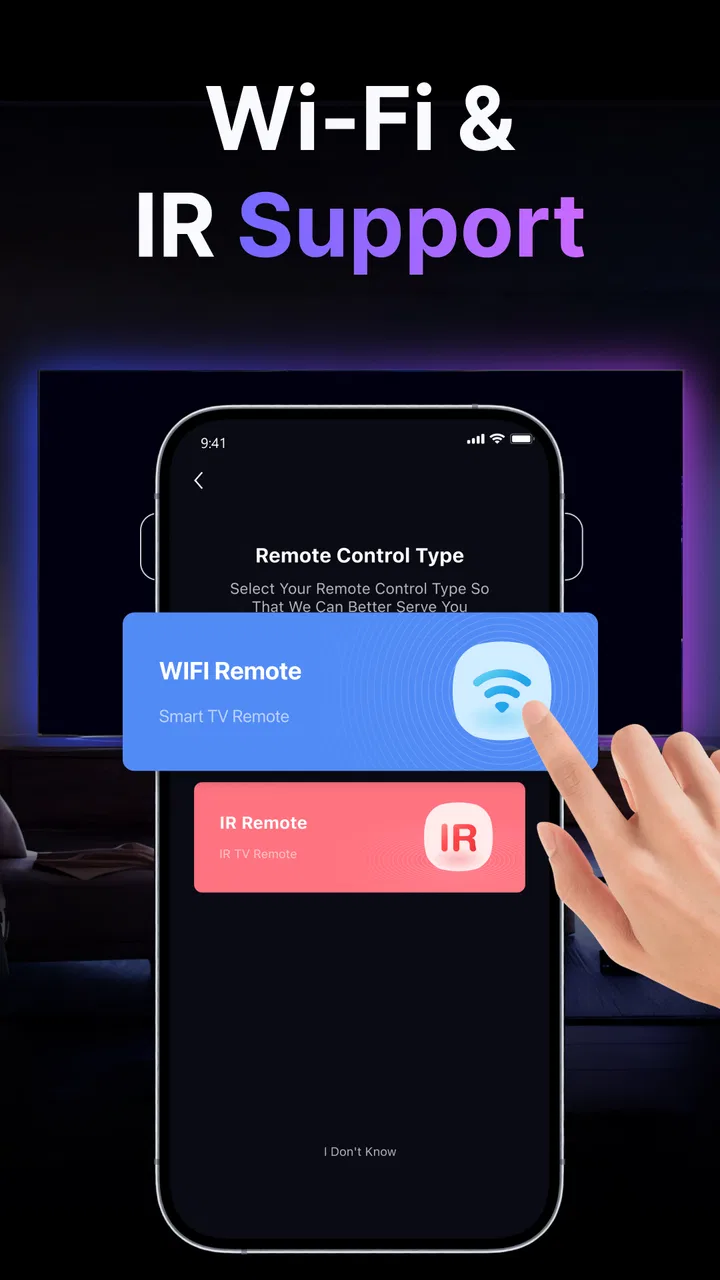
TV Remote Control - Smart TV is a mobile application designed to control compatible televisions from an Android or iOS device. After opening the app, you generally select your television brand or connect to the same Wi-Fi network as the TV. Depending on the model, it can provide virtual buttons for power, volume, channels, navigation, input selection, and other basic functions.
02Which televisions are compatible with TV Remote Control - Smart TV?
Compatibility depends on the specific version of the application and your television model. Most remote-control apps work best with smart TVs connected to the same Wi-Fi network, while some devices may also support infrared control if the phone includes an IR blaster. Before downloading, check the app listing and supported brands, because older, uncommon, or hotel televisions may not work correctly.
03Does my phone need to be connected to the same Wi-Fi network as the television?
In most cases, yes. Wi-Fi-based remote applications usually require both the smartphone and the smart TV to be connected to the same local network so they can detect and communicate with each other. Guest networks, VPNs, mobile hotspots, or router settings that isolate devices can prevent pairing. Make sure the TV is turned on and visible on your home network.
04Can TV Remote Control - Smart TV replace the original physical remote?
The application can be a useful replacement for everyday controls such as changing channels, adjusting volume, navigating menus, and switching inputs. However, it may not reproduce every specialized button or function found on the original remote, including certain voice commands, shortcut keys, or setup controls. It is best viewed as a convenient backup, particularly when the original remote is lost or unavailable.
05Is TV Remote Control - Smart TV free to download, and are there advertisements or in-app purchases?
The application may be available to download at no initial cost, but free versions commonly include advertising, optional subscriptions, or in-app purchases for removing ads and unlocking additional features. The exact pricing and conditions can vary by platform, country, and app update. Review the Google Play or App Store listing before installing, especially if you prefer an ad-free experience.
Pros
- Works with many popular Smart TV brands.
- Simple interface makes basic controls easy to find.
- Useful backup when the physical remote is missing.
- Quick pairing on compatible Wi-Fi networks.
- Usually includes volume
- channel
- and navigation controls.
Cons
- Phone and TV must usually share the same Wi-Fi network.
- Compatibility may vary between TV models and regions.
- Some features may require in-app purchases or subscriptions.
- Ads can interrupt use in the free version.
- Wi-Fi control may feel slower than a physical remote.

TV Remote Control - Smart TV
Gallery